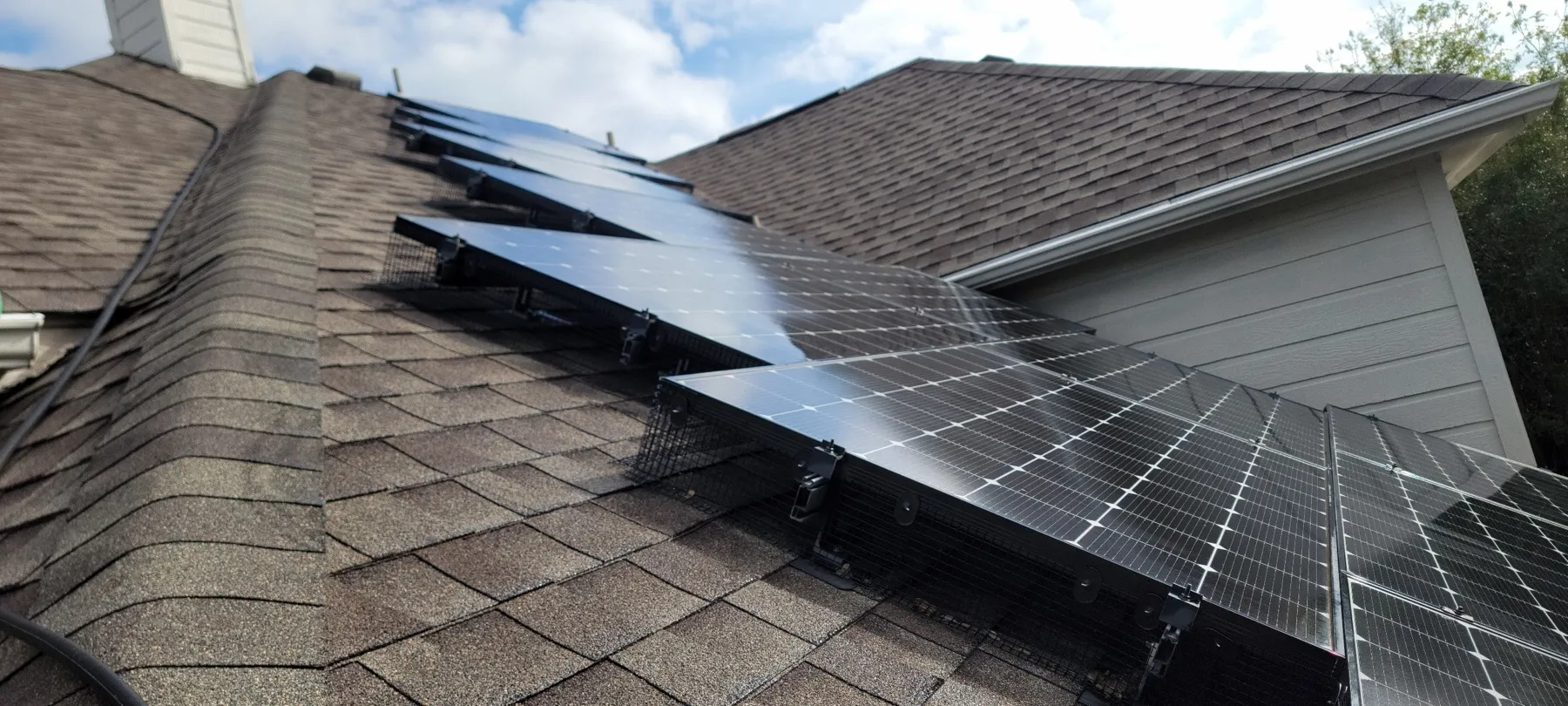
Keep birds and pests out from under your panels
Solar Critter Guards
A PVC-coated steel mesh barrier fitted around the perimeter of your array so birds, squirrels, and rodents can't get underneath it — installed to preserve airflow, drainage, and the look of your roofline.
- Material
- PVC-coated steel mesh, 1/2" openings
- Fasteners
- Panel-compatible clips — no drilling into modules
- Coverage
- Full array perimeter
- Finish
- Black, sits flush to the module frame
Why it matters
What critter guards actually does for you
Ends the repeat cleanup cycle
Nesting material, droppings, and debris come back every season until the access point is closed. The guard closes it.
Protects wiring from chewing
Squirrels and rodents gnaw exposed cable runs under panels. A perimeter barrier keeps them away from the wiring in the first place.
Preserves drainage and airflow
We fit the mesh so rain still runs off and air still moves under the modules — the panels need that gap to shed heat.
Restores your roofline
No more visible nests, straw, or streaking down the shingles below the array.
Which one are you?
Fixing a problem, or making sure you never have one
Both jobs use the same barrier. The difference is how much cleanup comes first.
Remediation — something is already up there
Nesting under a solar array is not a one-time mess. Birds return to the same site, and squirrels widen whatever gap they found. Until the perimeter is closed, you are paying for the same cleanup on a loop.
What we look for
- Scratching or scuffling overhead, usually loudest around dawn
- Droppings and streaking down the shingles below the array
- Straw, twigs, or insulation poking out from under the panel edge
- Gutters filling with the same debris a few weeks after every clean
- Birds landing repeatedly at one particular spot on the array
How the job runs
- Clear nesting material and debris out from under the array
- Clean up what it left on the roof and in the gutters below
- Photograph the condition of anything we find underneath
- Fit the mesh around the full perimeter so it cannot come back
On wiring: rodents chew cable, and we do sometimes find damaged or exposed conductors under an array. We will photograph it and tell you what we see — but we are not electricians and we do not repair it. That work belongs to a licensed electrician or your solar installer.
Prevention — closing it before anything moves in
A guard fitted to a clear array is a straightforward half-day job. There is nothing to remove, nothing to clean, and no damage to assess. It is the same barrier for less work.
A brand-new array
The gap under a new installation is open from day one. Nothing has moved in yet — which makes this the cheapest and least disruptive time to close it.
An older array that has stayed clear
Luck, mostly. Pest pressure changes as trees mature and neighbouring roofs get their own arrays. Closing the perimeter takes the variable out.
Trees close to the roofline
Overhanging branches are a direct route onto the roof for squirrels. If you have them, it is a question of when rather than if.
You are about to sell
A clean roofline with no nesting under the array is one less thing for an inspector to write up.
We will also tell you no. If your roof has no pest pressure, no tree access, and no history, we will say the guard can wait. We would rather have the call back in three years than sell you something you did not need.
What gets installed
A mesh barrier that disappears into the roofline
PVC-coated steel mesh with half-inch openings, clipped to the module frames around the full perimeter of the array.
- Half-inch openings — too small for birds, squirrels, or rats to pass
- PVC coating over steel so it does not rust out in a few seasons
- Clips designed for panel frames — we do not drill into your modules
- No roof penetrations to mount the barrier
- Fitted to preserve the airflow gap panels need to shed heat
- Rain runoff and drainage paths stay open
Black finish, sitting flush against the module frame. From the ground, most homeowners cannot pick it out.
Installed work
Critter guards on Collin County roofs
Our own photos from recent jobs.
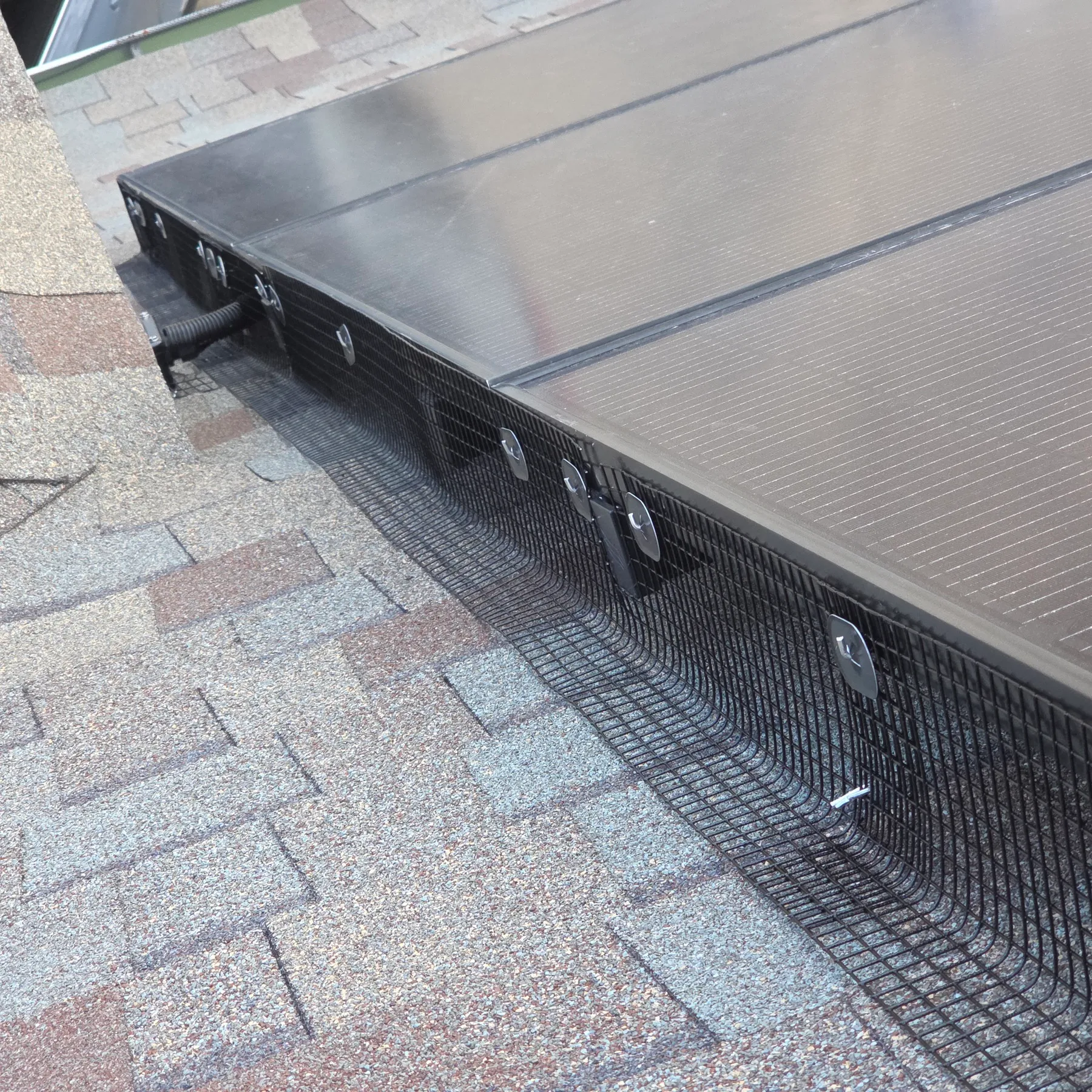
Mesh clipped along the lower edge of the array, following the module line exactly. 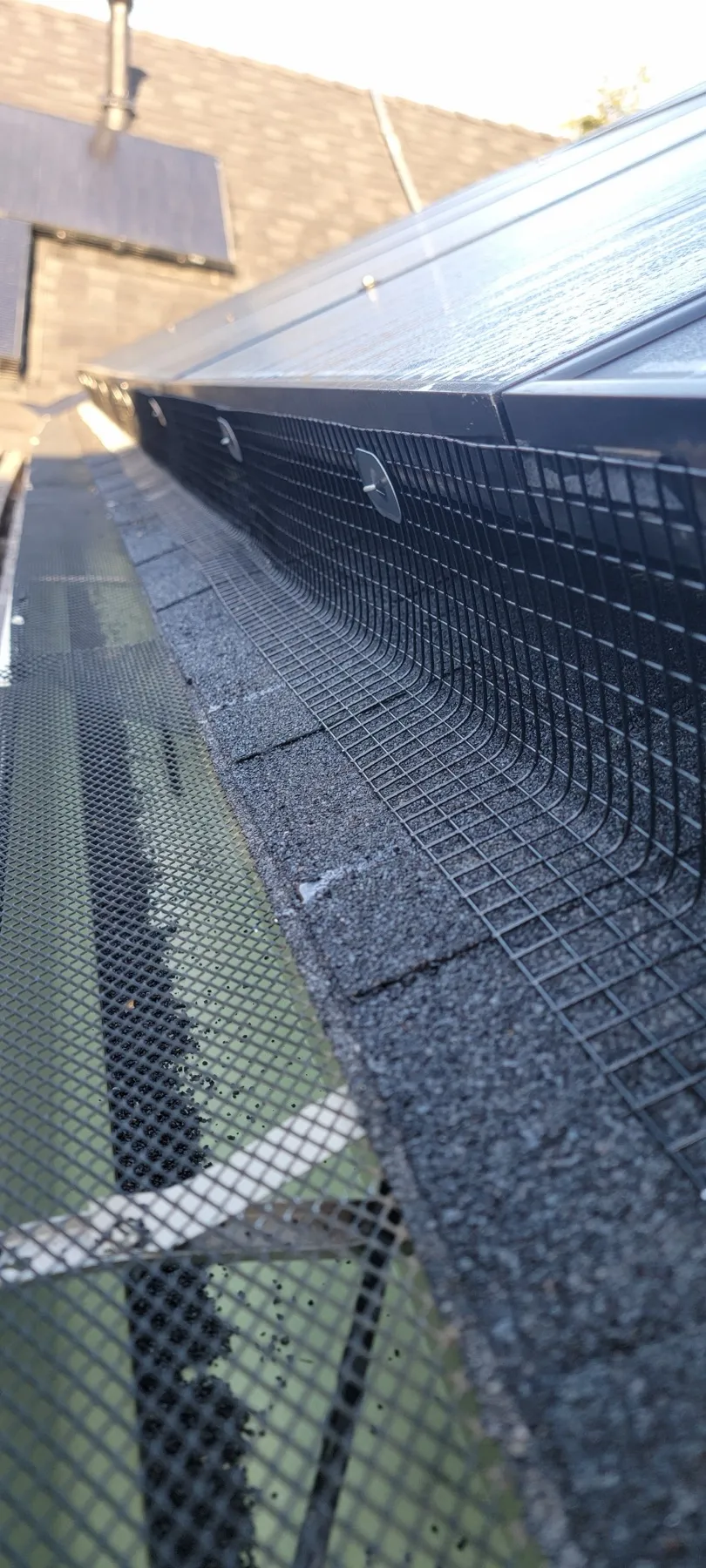
Perimeter guard running the length of the roofline. 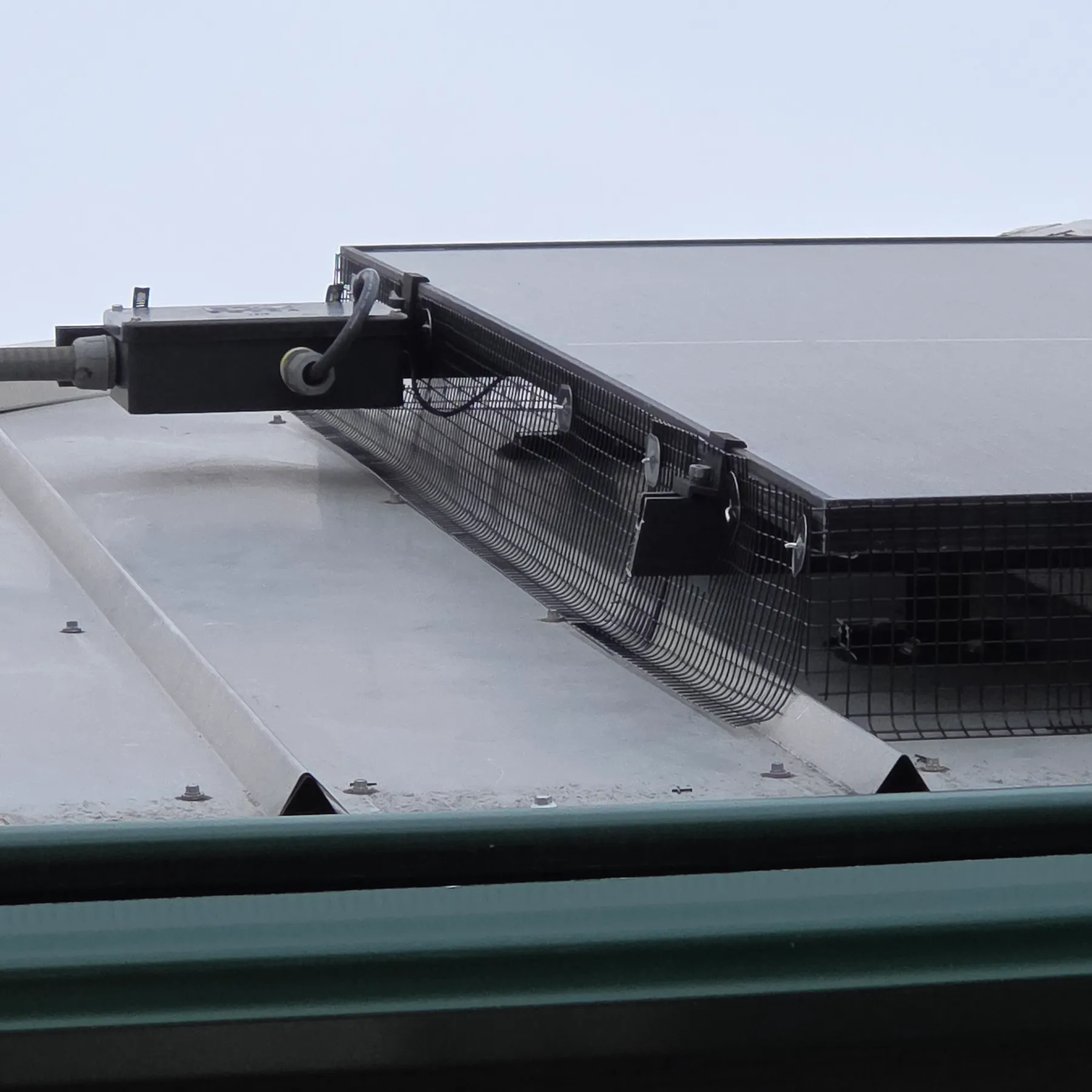
The mesh sits flush to the frame — no gap left at the top edge.
How it works
What the visit looks like
Inspect, recommend, do the work, review it with you. No surprises added at the end.
Inspect
We get on the roof and look at what is actually happening — array perimeter, nesting activity, glass condition, attic venting. Photos included.
Recommend
You get a written estimate that says what we would do and what it costs. If you do not need the work yet, we will tell you that instead.
Install or service
We do the work on the agreed date, protect the roof and the modules while we are up there, and clean up after ourselves.
Review
We walk you through what we found and what we did, and tell you what to watch for so you know when to call us again.
- Fully insured & bonded Licensed and insured in Texas
- Family-owned A Texas business serving Collin County
- Eco-friendly products No harsh chemicals, ever
- 5-star reviewed Verified Google reviews
Straight answers
Solar Critter Guards questions
Are solar critter guards worth it?
They are worth it if something is already living under your array, or if you are seeing recurring droppings, nesting material, or debris that keeps coming back after each cleanup. If your array has been clear for years and there is no bird or squirrel pressure on your roof, you may not need them yet. We will tell you either way during the inspection.
Do all solar panels need a critter guard?
No. Critter guards are not universally necessary. They matter most on roofs with active bird or squirrel presence, on arrays with a generous gap between the modules and the shingles, and on homes near mature trees. We inspect first and only recommend the guard where there is a reason for it.
How much does a critter guard cost?
It depends on the perimeter length of your array, how accessible the roof is, and whether existing nesting needs to be cleared out first. That is why we quote after looking at the roof rather than publishing a flat price. The estimate is free and written.
Will installing a guard damage my panels or roof?
The mesh attaches with clips designed for panel frames — we do not drill into the modules and we do not penetrate the roof deck to mount it. We also leave the airflow gap and rain runoff paths open, because closing them off would cause different problems.
What is the "33% rule" for solar panels?
That phrase is not a critter guard standard and it should not be used to decide whether you need pest exclusion around your array. Decide based on what is actually happening on your roof: signs of nesting, droppings, noise, and debris.
What if birds are already nesting under my panels?
Then it is a remediation job, not just a prevention job. We clear the nesting material and debris out from under the array first, clean up what it left behind, and then install the guard so it does not come back. Tell us what you are seeing when you request the quote so we can scope it correctly.
Free estimate
Get a critter guards quote
Answer three quick questions and we'll come take a look. Written estimate, no obligation.
Not sure what your roof needs?
Book a solar protection inspection. We'll look at the array, tell you what we see, and put a written estimate in your hands — no pressure, no obligation.